How Can a Flat Pack Container House Make a Reliable Building Feel Easy?
If you need space fast but you’re tired of vague timelines, messy sites, and budget surprises, a Flat Pack Container House can be a practical way to get a clean, durable structure delivered and assembled with far less friction than traditional builds.
Article Abstract
A Flat Pack Container House is designed to solve the headaches that slow down projects: unpredictable construction schedules, difficult site conditions, scattered subcontractors, and inconsistent quality. This article breaks down what a flat-pack container house is, where it works best, how comfort and safety are achieved, and how to evaluate suppliers and specifications so you can avoid common mistakes. You’ll also find a comparison table, a practical buyer checklist, and clear answers to frequently asked questions—so you can move from “I’m interested” to “I’m confident.”
Outline
- Common customer pain points and why they happen
- What a flat-pack container house actually is (and what it is not)
- Where this solution fits best
- Comfort, insulation, and weather performance
- Budget and timeline planning without guesswork
- Logistics, foundations, and installation flow
- How to compare options and choose a supplier
- FAQ and next-step guidance
Table of Contents
- Customer Pain Points This Solves
- What Is a Flat Pack Container House
- Where It Works Best
- Comfort and Weather Performance
- Budget and Timeline Planning
- Logistics and Installation
- Comparison Table
- Buyer Checklist
- FAQ
- Next Step
Customer Pain Points This Solves
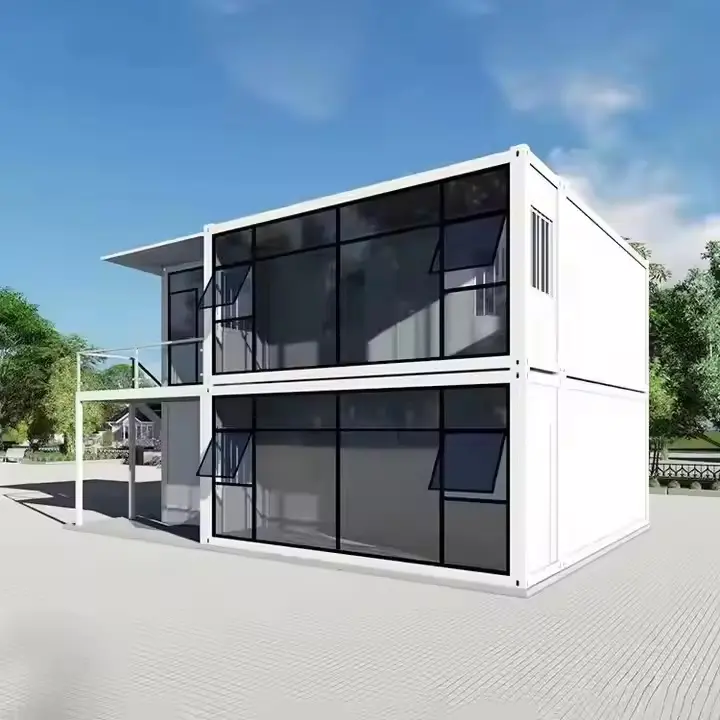
Most people don’t start looking for a Flat Pack Container House because it sounds trendy. They start because conventional building methods create repeated problems—especially when the project is remote, time-sensitive, or managed by a lean team.
- “I can’t afford delays.” Traditional builds often rely on multiple trades arriving in sequence. One delay cascades into the next. Flat-pack container solutions concentrate more work into controlled manufacturing and standardized assembly steps.
- “I need a predictable budget.” When design details aren’t locked early, change orders grow fast. A flat-pack approach encourages you to confirm structure, layout, and core options up front so pricing stays steadier.
- “My site is complicated.” Uneven ground, tight access roads, seasonal weather, and limited utilities all punish conventional construction. Flat-pack systems can reduce on-site work, shorten exposure to weather windows, and simplify coordination.
- “I’m worried it’ll feel like a metal box.” Comfort is the make-or-break point. The right wall system, insulation strategy, and ventilation plan can turn “container-style” into a livable, quiet, temperature-stable space.
- “I need something scalable.” Many projects begin with a single unit (office, accommodation, clinic room) and expand later. Modular planning makes expansion more realistic than a one-off custom build.
The goal isn’t just speed. It’s removing uncertainty: fewer unknowns, fewer moving parts, and fewer opportunities for the project to drift.
What Is a Flat Pack Container House
A Flat Pack Container House is a prefabricated building system delivered in compact form, then assembled on site. While “container house” language is common, many flat-pack systems are not repurposed shipping containers. Instead, they use a steel frame and standardized panels designed for fast installation and repeatable quality.
What you typically get in a flat-pack approach
- Structural frame: Steel columns and beams engineered to form the load-bearing skeleton.
- Wall and roof panels: Insulated panel options are common, helping with heat, noise, and energy control.
- Openings prepared for doors and windows: So installation is consistent and weather sealing is easier to standardize.
- Configurable interior setup: Layouts can be simple (open space) or divided (bedroom + bathroom + kitchenette) depending on your plan.
What it is not
- It is not automatically “temporary” or “low quality.” Longevity depends on specification choices, corrosion protection, waterproofing details, and local exposure conditions.
- It is not automatically “plug-and-play.” You still need to plan the site, foundation/base, drainage, electrical connection, and local compliance.
This is where a capable manufacturer matters. Weifang Ante Steel Structure Engineering Co., Ltd. focuses on container-style prefab solutions and the kind of practical engineering decisions that affect real-world use—like frame stability, panel fit, and assembly logic—so the site work stays straightforward instead of chaotic.
Where It Works Best
A Flat Pack Container House can be used in many scenarios, but it shines when you need speed, repeatability, or the ability to deploy to challenging sites.
- Site offices and worker accommodation: Quick setup, predictable layout, and easier relocation planning.
- Security rooms, gatehouses, and control points: Compact footprint, simple interior fit-out, fast delivery.
- Emergency or transitional housing: When time-to-occupancy matters more than complex architecture.
- Pop-up retail, events, and temporary facilities: Clean finishes and standardized modules can look surprisingly polished with the right exterior treatment.
- Remote clinics, classrooms, and admin spaces: Particularly when local labor availability is limited.
If your project demands highly customized architecture, unusual spans, or multi-story complexity, you can still use container-style modules—but you’ll want more detailed engineering review and stricter on-site controls.
Comfort and Weather Performance
The most common fear is simple: “Will it be too hot in summer and too cold in winter?” Comfort is not a slogan—it’s the result of specific decisions you can confirm in writing.
Key comfort factors you should lock in early
- Insulation strategy: Ask what’s inside the wall and roof panels and how thermal bridging is managed around the frame.
- Air and moisture control: Look for clear sealing details, flashing logic, and water-shedding roof design.
- Ventilation plan: Even a well-insulated unit feels bad without controlled fresh air. Plan for exhaust in wet areas and sensible air flow.
- Noise performance: If you’re near roads, machinery, or dense work sites, ask about panel density and door/window sealing.
- Corrosion protection: Coastal or humid environments need stronger protective measures than dry inland areas.
A practical tip: Don’t only ask “is it insulated.” Ask “how is it insulated, and where are the weak points?” The weak points (junctions, door frames, roof edges) are where comfort problems are born.
Budget and Timeline Planning
If your goal is to reduce surprises, treat your Flat Pack Container House like a system with two timelines: manufacturing and site readiness. Many projects fail not because the unit is late, but because the site isn’t ready when the unit arrives.
Cost buckets you should separate (so nothing hides)
- Unit structure and panels: Frame, walls, roof, floor system.
- Openings and finishes: Doors, windows, interior wall finish, flooring.
- MEP scope: Electrical distribution, lighting, plumbing lines, bathroom/kitchen fixtures (if included).
- Transport and unloading: Shipping method, local unloading equipment, on-site handling.
- Foundation/base: Piers, slab, steel base, leveling method, drainage.
- Connection and permits: Utility hookup work, local approvals, inspections.
Timeline reality check
- Manufacturing can be efficient when specs are finalized early.
- Site work can become the bottleneck if access roads, leveling, drainage, or utility decisions are delayed.
- Clear scope boundaries prevent “we thought that was included” disputes.
When you request a quote, ask for a scope list that explicitly states what is included and excluded. That one step eliminates most of the expensive misunderstandings.
Logistics and Installation
Flat-pack systems reduce onsite complexity, but they don’t remove it. The winning approach is to make installation boring—in the best way.
What an efficient installation flow usually looks like
- Confirm base readiness: Level, stable, drained, with anchor points planned.
- Unpack and stage components: Keep panels protected; stage in build order to avoid re-handling.
- Assemble the structural frame: Square, plumb, and tightened to specified torque practices.
- Install roof and wall panels: Follow sealing instructions; don’t improvise weatherproofing.
- Fit doors/windows and test seals: Water ingress problems usually come from rushed sealing.
- Complete MEP connections: Verify safety devices and wet-area waterproofing before finishing.
- Final inspection and punch list: Fix the small issues while access is easy.
Common mistakes to avoid
- Skipping drainage planning: Water pooling around the base causes long-term problems fast.
- Choosing the cheapest window/door set: Comfort, noise, and leakage issues show up here first.
- Letting “temporary” become “careless”: If people will live or work inside, treat details seriously.
Comparison Table
Here’s a practical comparison to help you decide whether a Flat Pack Container House is the right tool for your project.
| Decision Factor | Flat Pack Container House | Conventional On-Site Build | Other Prefab Modular Options |
|---|---|---|---|
| Speed to usable space | Fast when specs are finalized and site is ready | Often slower due to sequencing trades and weather exposure | Varies; can be fast but may require heavier lifting/logistics |
| Budget predictability | Typically higher predictability with clear scope | More variable due to labor shifts, changes, and unknown site issues | Moderate; depends on customization and shipping complexity |
| Site disruption | Lower; assembly-focused | Higher; longer on-site work period | Moderate |
| Relocation or phased expansion | Often easier to plan for | Difficult and expensive | Possible, but varies by system |
| Comfort potential | High if insulation, sealing, and ventilation are specified well | High, but depends heavily on contractor execution | High, varies by module quality and detailing |
Buyer Checklist
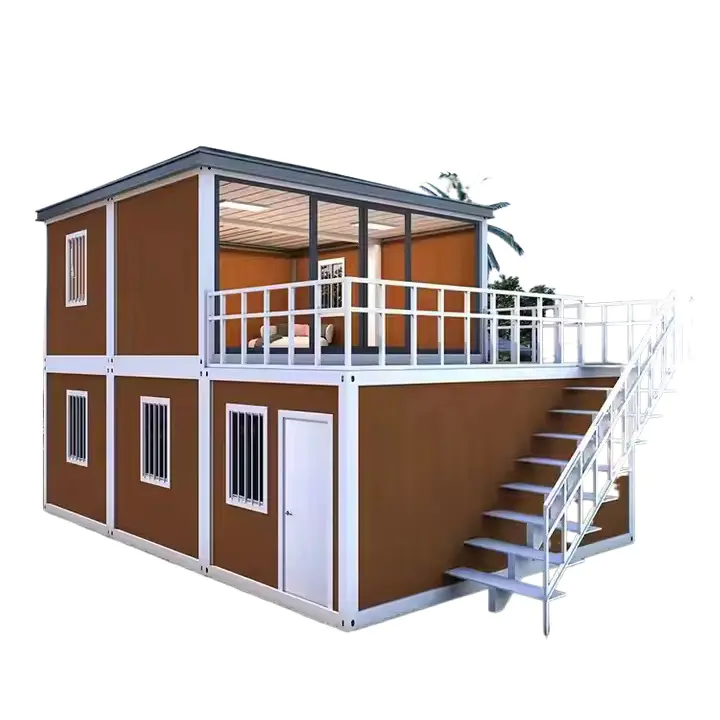
If you only do one thing after reading this, do this: turn your interest into a written checklist. It’s the fastest way to separate “looks good” from “works well.”
- Define the use case: Office, accommodation, storage, clinic, retail—each has different comfort and utility needs.
- Confirm climate assumptions: Temperature range, humidity, wind, snow load, salt air exposure if coastal.
- Lock the layout: Open plan or partitioned; wet areas require tighter waterproofing detail.
- Ask for a scope list: Structure, insulation, doors/windows, interior finishes, electrical/plumbing inclusion details.
- Clarify base requirements: Recommended foundation type, anchoring method, drainage guidance.
- Request assembly guidance: Step sequence, tool needs, labor estimate assumptions, critical sealing points.
- Plan utilities early: Power source, water supply, wastewater handling, ventilation.
- Confirm after-sales support: Spare parts, replacement panels, door/window hardware availability.
Supplier conversation shortcut: Ask the manufacturer to explain the three most common failure points they see in field installations and how their design reduces those risks. A serious supplier will have a concrete answer.
FAQ
Q: Does a Flat Pack Container House require a full concrete foundation?
A: Not always. Many projects use a slab, piers, or a steel base depending on soil, local conditions, and permanence. The key is stable leveling, anchoring, and drainage, not “concrete for everything.”
Q: Will it rust quickly?
A: Steel durability depends on protective treatment, coating quality, and exposure conditions. If you’re in a coastal or high-humidity area, specify corrosion protection and maintenance expectations clearly from the start.
Q: Can it be comfortable in very hot or very cold regions?
A: Yes—if insulation, sealing, and ventilation are properly planned. Comfort failures usually come from weak junction detailing (edges, openings, roof transitions) rather than the general concept.
Q: How long does installation take?
A: Assembly time depends on unit size, site readiness, and interior scope. The better your base preparation and staging plan, the faster and cleaner the installation process becomes.
Q: Can I customize the layout and finishes?
A: In most cases, yes. Common customization includes partitioning, bathrooms, electrical plans, window/door placement, and interior finishes. Keep customization practical so you don’t lose the benefits of standardization.
Q: What should I ask to avoid hidden costs?
A: Ask for an included/excluded list and separate the quote into unit cost, shipping/unloading, base/foundation guidance, and utility connection responsibilities. Most budget surprises live in the “assumptions.”
Next Step
If you’re considering a Flat Pack Container House, the fastest way to get a reliable proposal is to share three things: your location/climate, your intended layout (even a simple sketch), and your timeline constraints. From there, a manufacturer can recommend a sensible specification—without overselling features you don’t need.
Weifang Ante Steel Structure Engineering Co., Ltd. works with clients who want practical prefab solutions that are easier to deploy, easier to manage, and easier to expand. If you’d like help matching a configuration to your site and use case, contact us with your basic requirements and we’ll guide you toward a clear, buildable plan.