How Can a Folding Container House Make Fast Projects Less Risky?
Abstract
A Folding Container House looks simple on the outside, but buyers usually aren’t shopping for “a box.” They’re trying to solve real problems: unpredictable timelines, limited labor, expensive transport, tight sites, and the fear that a “quick build” will become a quality or compliance headache later. This article breaks down what actually matters when you’re choosing a Folding Container House for staff accommodation, site offices, emergency housing, pop-up clinics, classrooms, security rooms, or temporary retail. You’ll get a practical buying framework, a comparison table, a step-by-step procurement checklist, and answers to common questions—so you can move fast without gambling on outcomes.
Table of Contents
- Outline
- What Problems Are Buyers Really Trying to Fix?
- What Exactly Is a Folding Container House?
- What Should You Evaluate Before You Buy?
- How Does It Compare With Other Temporary Buildings?
- What Does Delivery and Installation Look Like?
- How Do You Make It Comfortable and Safe for People?
- What Can You Customize Without Creating Delays?
- What Is the Easiest Procurement Checklist to Follow?
- FAQ
- Next Step
Outline
- Identify the “hidden” pain points behind temporary-building purchases
- Explain how folding designs reduce risk in transport, labor, and timelines
- Provide evaluation criteria that protect budget and occupant experience
- Compare folding units with flat-pack and conventional prefab options
- Walk through installation logistics and site-readiness essentials
- Share comfort, safety, and durability upgrades that matter most
- Offer a procurement checklist you can copy into your RFQ
- Answer common questions from contractors, developers, and NGOs
What Problems Are Buyers Really Trying to Fix?
Most projects don’t fail because someone chose the “wrong” temporary structure. They fail because expectations were vague and the real constraints weren’t discussed early. In practice, buyers of a Folding Container House often face these recurring pain points:
- Time pressure: A site office is needed next week, not next month. Emergency or seasonal demand can’t wait for a traditional build cycle.
- High transport cost: Oversized loads and multiple shipments can burn budget faster than the unit itself.
- Labor uncertainty: Skilled installers may be scarce, and overtime is expensive. You need a system that works with a small crew.
- Site restrictions: Tight access roads, limited staging space, or sensitive environments require compact delivery and minimal disruption.
- Comfort complaints: “Temporary” doesn’t mean people accept poor insulation, noisy walls, heat loss, or bad ventilation.
- Long-term risk: Temporary units often become semi-permanent. If materials, wiring, or corrosion protection are weak, you’ll pay later in maintenance and downtime.
The promise of a Folding Container House is not just speed—it’s control: fewer moving parts in delivery and assembly, clearer scheduling, and less dependency on specialized labor. But that promise only holds if you evaluate the right details.
What Exactly Is a Folding Container House?
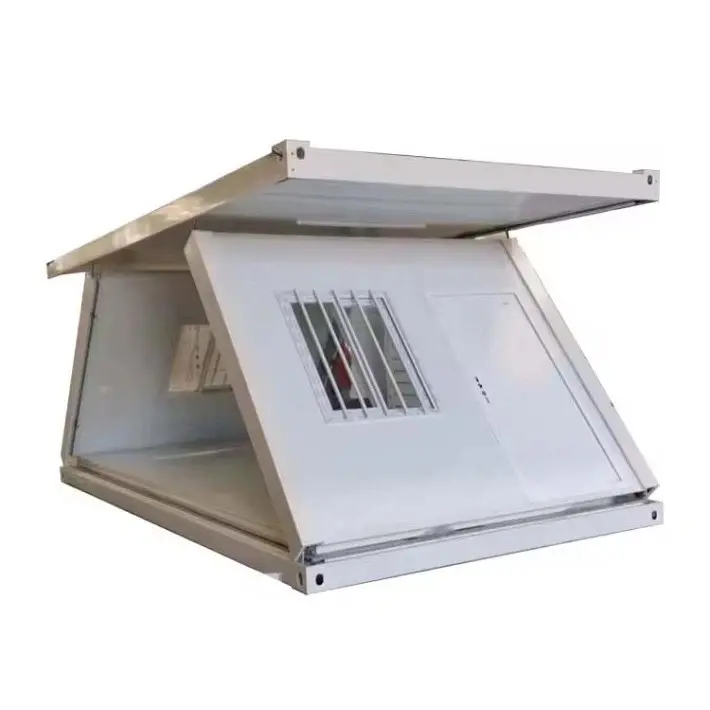
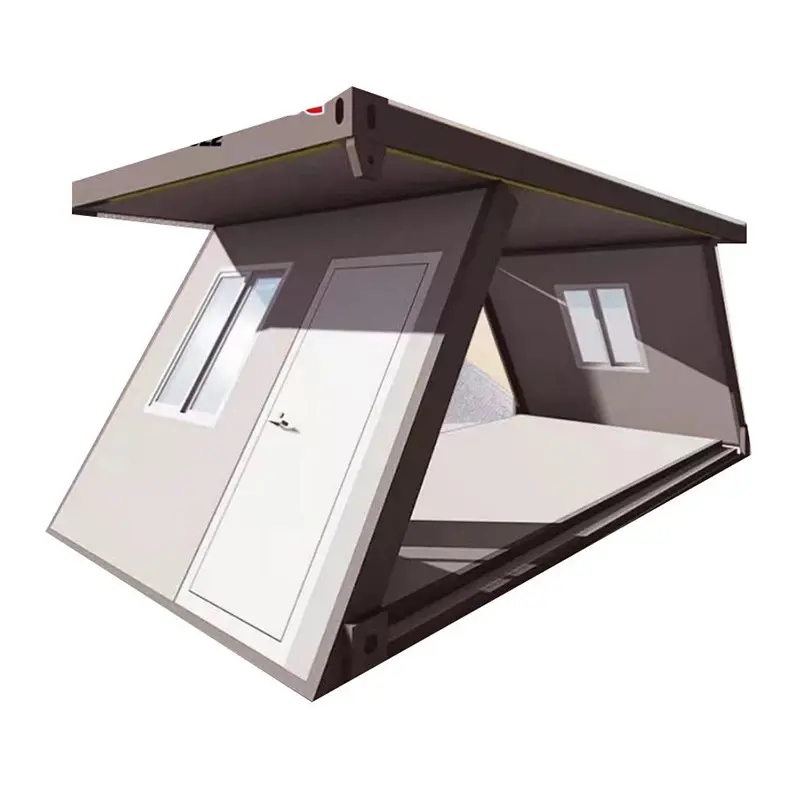
A Folding Container House is a modular building unit designed to collapse or fold into a more compact form for transportation, then expand on-site into a usable room or multi-room layout. The goal is to reduce shipping volume and simplify deployment while still offering a structured, enclosed space suitable for real occupancy.
Depending on the configuration, folding units can be used as:
- Construction site offices and meeting rooms
- Worker accommodation and camps
- Temporary clinics, isolation rooms, and medical points
- Classrooms, training rooms, and community facilities
- Security posts, gatehouses, and equipment rooms
- Pop-up retail, ticketing booths, and event support spaces
Companies like Weifang Ante Steel Structure Engineering Co., Ltd. develop folding solutions specifically for fast deployment and repeatable installation—helpful when you need consistent performance across multiple sites or a scalable roll-out plan.
What Should You Evaluate Before You Buy?
If you only compare floor area and price, you’re basically buying blind. Use the criteria below to protect your timeline, budget, and occupant satisfaction.
- Structural stability: Ask how the frame behaves after repeated folds. A good design should maintain alignment and stiffness without “creeping” out of square over time.
- Weather performance: Confirm how the unit handles rain, wind, and temperature swings. Look for clear information on roof drainage, sealing points, and condensation control.
- Insulation and acoustic comfort: People judge temporary buildings harshly when they’re loud, sweaty, or freezing. Specify insulation type and thickness, plus expected sound reduction where relevant.
- Electrical and plumbing readiness: Decide whether you need a plug-and-play system, preinstalled lighting, sockets, distribution box, and optional plumbing modules.
- Corrosion protection: For coastal, humid, or industrial areas, coatings and material selection matter more than almost anything else for lifecycle cost.
- Fire and safety basics: Plan for exits, emergency lighting, non-slip flooring, and safe cable routing. Also check what local requirements apply to your project type.
- Repeatability: If you plan to relocate units, confirm how many fold/unfold cycles the design is intended to withstand and what maintenance is recommended.
- Supplier support: The best unit is the one that arrives complete, with clear installation guidance, spare parts availability, and responsive after-sales support.
One buyer-friendly approach is to treat your purchase like a system, not a product: structure + envelope + services + deployment plan. That’s where folding units often shine—especially when the supplier can standardize options without turning every order into a custom engineering project.
How Does It Compare With Other Temporary Buildings?
Here’s a practical comparison to help you choose the right path for your project.
| Option | Best For | Common Buyer Wins | Typical Watch-Outs |
|---|---|---|---|
| Folding Container House | Fast deployment with reduced shipping volume | Quicker setup, fewer onsite steps, easier scaling across sites | Quality varies; folding joints and seals must be well-designed |
| Flat-pack container house | Projects with reliable labor and storage space | Cost control, flexible packing, broad configuration choices | More assembly time; higher dependency on skilled installers |
| Traditional prefab (panels/steel) | Longer-term buildings or complex layouts | High customization, strong performance potential | Longer lead time; more site coordination and trades needed |
| Rental cabins | Short projects with local supply | Low upfront effort, simple contracting | Limited availability, variable condition, ongoing rental cost |
If your priority is predictable speed with manageable logistics, a Folding Container House is often the “least drama” option—especially when you’re shipping across regions or scaling a multi-site program.
What Does Delivery and Installation Look Like?
Fast installation doesn’t mean “no planning.” A smooth deployment usually comes from a short, clear site-readiness checklist and a realistic understanding of what happens on day one.
- Site base: Prepare a level foundation (concrete pads, strip foundation, or a steel base depending on local practice). The more level the base, the better the sealing and door alignment.
- Access and unloading: Confirm truck access, turning radius, and crane/forklift requirements. Folding units are typically delivered compact, which helps on tight roads.
- Utilities plan: Decide where power, water, and drainage will connect. Even “temporary” buildings need a clean, safe utility approach.
- Setup workflow: A good installation plan sequences placement, unfolding, anchoring, sealing, then interior commissioning (electrical tests, lighting checks, door/window checks).
- Safety perimeter: Set a basic exclusion zone during lifting/unfolding and keep the crew focused. Speed improves when the worksite isn’t chaotic.
A helpful rule of thumb: if the supplier can provide a simple installation guide with clear steps, tools, crew size suggestions, and commissioning checks, your risk drops dramatically—especially when you deploy to remote areas where improvisation is costly.
How Do You Make It Comfortable and Safe for People?
People can tolerate “temporary” for about five minutes. After that, comfort becomes a productivity and wellbeing issue. If your Folding Container House is used as accommodation, offices, or public-facing space, focus on upgrades that create immediate real-world improvement:
- Thermal comfort: Choose insulation that matches climate reality. If you face hot days and cool nights, balance insulation with ventilation to reduce condensation.
- Ventilation: Specify exhaust fans for wet areas, and plan airflow for sleeping rooms or crowded offices.
- Lighting: Preplanned lighting layouts reduce the “warehouse” feeling and help avoid shadowy corners in workspaces.
- Noise control: If units are near machinery, roads, or generators, better wall/roof build-ups and sealing points can change the occupant experience dramatically.
- Durability details: Door hardware, floor surfaces, and protective trims take the most abuse. Ask what’s reinforced and what’s standard.
Done right, a Folding Container House doesn’t feel like a compromise—it feels like a practical building you can trust for real daily use.
What Can You Customize Without Creating Delays?
Customization is useful, but too much can slow production and complicate spare parts. The smartest approach is to customize only the items that directly affect function, comfort, or compliance, while keeping the rest standardized.
- Layout: single room, office + restroom, dorm layout, meeting room, or multi-unit combinations
- Doors and windows: quantity, placement, and security level
- Interior finish: wall panels, flooring type, washable surfaces for medical or food-related use
- Electrical package: sockets, lighting, distribution, optional prewiring for AC
- Sanitary module: toilet, shower, water heater (where required), and drainage strategy
If you’re ordering multiple units, ask the supplier to propose a “standard package” plus a small menu of controlled options. That keeps delivery predictable and makes maintenance easier later.
What Is the Easiest Procurement Checklist to Follow?
Copy this checklist into your RFQ so vendors respond with comparable information:
- Use case: office / accommodation / clinic / classroom / retail / storage
- Climate and environment: temperature range, humidity, coastal exposure, wind considerations
- Target occupancy: number of people, daily usage hours
- Unit size and layout: internal dimensions, room count, restroom required or not
- Insulation requirement: wall/roof insulation type and thickness
- Electrical scope: outlets, lighting, distribution box, voltage, plug type
- Plumbing scope: water supply, drainage plan, fixtures list
- Transport plan: destination, unloading method, site constraints
- Installation plan: crew size, tools, estimated setup time, anchoring method
- Documentation: installation guide, commissioning checklist, maintenance guidance
- Warranty and support: terms, spare parts availability, response process
This approach forces clarity early—so you avoid the classic “it arrived, but it’s missing what we assumed” scenario.
FAQ
-
Q: What makes a Folding Container House different from a normal container?
A: A standard shipping container is primarily a logistics asset. A Folding Container House is designed as a building system—optimized to reduce shipping volume and simplify on-site deployment while providing livable or workable space. -
Q: Is a Folding Container House suitable for long-term use?
A: Many buyers start with “temporary” and end up using the units longer than expected. Long-term success depends on material quality, corrosion protection, insulation, and proper installation on a stable base. -
Q: How do I avoid condensation and musty smells?
A: Combine appropriate insulation with ventilation. Focus on airflow in wet areas and manage indoor humidity. Good sealing and thoughtful roof/wall design also reduce moisture issues. -
Q: What should I prioritize if my site is remote?
A: Prioritize a simplified installation process, preinstalled electrical where possible, clear documentation, and a packing plan that minimizes missing parts. Remote sites punish “we’ll figure it out later.” -
Q: Can multiple units be connected to create a larger building?
A: Yes. Many folding units can be combined side-by-side or end-to-end to create larger offices, dormitories, or functional blocks—planning connections early helps with weather sealing and utilities routing. -
Q: What details usually cause the most disputes after delivery?
A: The most common issues are unclear electrical scope, mismatched expectations on insulation/finishes, missing small components, and underestimating the importance of a level foundation.
Next Step
If your project needs fast, repeatable space without the usual logistics headaches, a Folding Container House can be the most practical way to reduce scheduling risk and keep teams comfortable on-site. If you want help choosing the right configuration, options, and delivery plan, Weifang Ante Steel Structure Engineering Co., Ltd. can support your procurement process from specification to deployment—so you’re not guessing under deadline pressure.
Ready to move forward? Tell us your use case, location, and target timeline, and we’ll suggest a configuration that fits your site realities—please contact us to get a tailored proposal.