Abstract: A Flat Pack Container House is designed to solve real-world building headaches—high labor costs, long timelines, unpredictable quality, and complicated logistics. This in-depth guide explains how flat-pack container structures work, what to look for in materials and manufacturing, how to plan utilities and insulation, and how to avoid common buying mistakes. You’ll also find a practical comparison table, a step-by-step procurement checklist, and a clear FAQ to help you decide with confidence.
Contents
- 1. What a Flat Pack Container House Actually Is
- 2. The Problems Buyers Want to Eliminate
- 3. How the Flat-Pack System Works
- 4. Materials That Matter More Than Marketing
- 5. Comfort: Insulation, Ventilation, Noise, and Climate
- 6. Planning Checklist: Site, Foundation, Utilities
- 7. Comparison Table: Flat Pack vs. Modular vs. Traditional
- 8. Common Use Cases and What to Prioritize
- 9. Common Buying Mistakes (and How to Avoid Them)
- 10. FAQ
- 11. Final Notes
1. What a Flat Pack Container House Actually Is
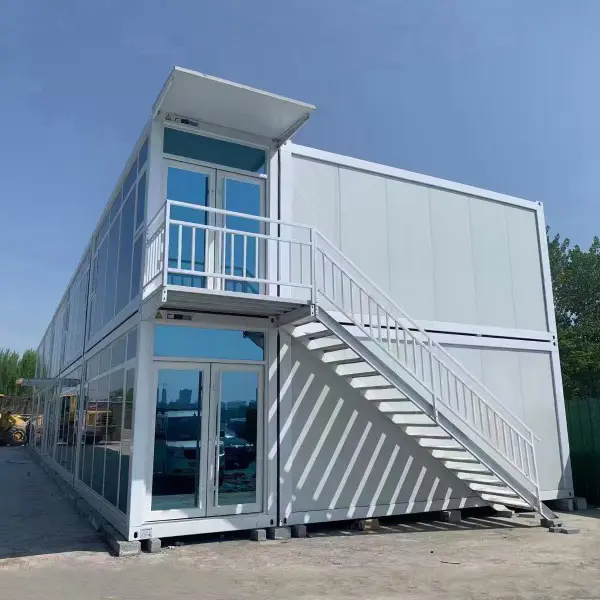
A Flat Pack Container House is a prefabricated building system shipped as a compact “flat” package—typically including the primary frame, wall panels, roof system, doors/windows, and optional electrical/plumbing components. Instead of delivering a fully assembled module that requires oversized transport, the flat-pack approach focuses on efficient logistics and fast on-site assembly.
Think of it as an engineered kit: the structure is produced in a controlled factory environment, then assembled on location using standardized connections. That “kit logic” is what reduces delays, labor uncertainty, and shipping headaches.
Quick takeaway: Flat-pack container housing is about predictable delivery, predictable build steps, and scalable rollout—especially useful when you need multiple units or a tight schedule.
2. The Problems Buyers Want to Eliminate
Most buyers aren’t choosing a flat-pack system because it’s trendy. They’re choosing it because conventional building can be painful:
- Timeline risk: Weather delays, labor shortages, and changing subcontractor schedules can derail completion.
- Budget creep: Small “unplanned” extras (rework, overtime, material waste) add up quickly.
- Quality inconsistency: Site-built quality can vary based on who shows up and how they interpret drawings.
- Logistics complexity: Remote sites or island delivery can be expensive and unpredictable for bulky loads.
- Expansion uncertainty: If you need 10 units now and 20 later, repeating a traditional build is slow and inconsistent.
A Flat Pack Container House targets these pain points by simplifying the “unknowns”: parts are standardized, assembly steps are repeatable, and shipping is more efficient than moving full modules.
3. How the Flat-Pack System Works
While configurations differ by supplier, the most common flat-pack workflow looks like this:
- Design confirmation: Layout, door/window positions, internal partitions, and optional systems are finalized.
- Factory production: Frame components and panels are manufactured with consistent tolerances.
- Pre-fitting & labeling: Key parts are matched, labeled, and packed to reduce confusion on-site.
- Containerized shipping: Flat packing maximizes the number of units per container and reduces transport cost per square meter.
- On-site assembly: Teams assemble the frame, install panels, then finish utilities and interiors as required.
If you’re buying for a project with multiple buildings—worker accommodation, temporary offices, site clinics, classrooms—repeatability is a major advantage. One good assembly becomes a reliable template for the next 5, 10, or 50 units.
4. Materials That Matter More Than Marketing
Two flat-pack houses can look similar in photos but perform very differently in real life. When comparing suppliers, focus on the “invisible” decisions that affect durability and comfort:
- Steel framework: Ask about steel grade, thickness, corrosion protection, and connection details.
- Wall panel core: Different cores have different insulation performance and fire behavior. Match the solution to your local requirements and climate.
- Roof system: Look for weatherproofing design, drainage strategy, and thermal bridging control.
- Doors and windows: The best wall insulation won’t help if air leaks through low-quality frames.
- Fasteners and seals: Water ingress is often a sealing problem, not a panel problem.
Manufacturers such as Weifang Ante Steel Structure Engineering Co., Ltd. typically support buyers who need scalable solutions—where consistency, packaging discipline, and reliable manufacturing processes matter as much as the end appearance.
5. Comfort: Insulation, Ventilation, Noise, and Climate
Comfort is where many container-based projects succeed or fail. A Flat Pack Container House can be made comfortable in hot, cold, humid, coastal, and high-altitude environments—but only if the specification matches the reality of the site.
- Insulation strategy: Choose panel performance based on your temperature range, not just cost.
- Ventilation: In humid climates, airflow planning can be as important as insulation thickness.
- Condensation control: Ask how the design reduces thermal bridging and manages moisture.
- Noise control: For dormitories or offices, consider interior finishing and window/door sealing for better acoustic comfort.
- Energy use: Better building envelope choices reduce HVAC strain and long-term operating cost.
Buyer tip: Ask your supplier for climate-specific recommendations (hot-humid vs. cold-dry vs. coastal corrosion). A one-size-fits-all spec often becomes expensive after installation.
6. Planning Checklist: Site, Foundation, Utilities
Fast assembly doesn’t mean “no planning.” The smoothest projects are the ones that prepare the basics early:
- Site access: Confirm crane/forklift access, turning radius, and unloading area.
- Foundation choice: Depending on soil and permanence, options may include concrete pads, strip foundations, piers, or steel base frames.
- Wind and seismic conditions: Match structural details and anchoring to your local conditions.
- Utilities routing: Decide where electrical entry, drainage, water supply, and ventilation will connect before shipping.
- Interior layout: Bedrooms, bathrooms, offices, and storage zones affect plumbing runs and panel cutouts.
If you’re doing a multi-unit rollout, document your first unit carefully—foundation plan, utility connection map, and assembly steps—then repeat that playbook to cut errors and speed up future installations.
7. Comparison Table: Flat Pack vs. Modular vs. Traditional
| Factor | Flat Pack Container House | Fully Modular (pre-assembled) | Traditional Site-Built |
|---|---|---|---|
| Shipping efficiency | High (compact packaging) | Medium/Low (bulky loads) | Varies (many materials deliveries) |
| On-site time | Fast (repeatable assembly) | Very fast (place and connect) | Slow (multiple trades) |
| Labor predictability | High (standardized steps) | High (less assembly) | Lower (trade coordination needed) |
| Design flexibility | High (configurable kits) | Medium (module constraints) | High (but slower and costlier) |
| Best for remote sites | Strong | Mixed (transport limits) | Weak (logistics heavy) |
| Scaling to many units | Strong | Strong | Weak/Slow |
8. Common Use Cases and What to Prioritize
Different projects have different “non-negotiables.” Here’s how many buyers prioritize features by use case:
- Worker accommodation: durability, ventilation, easy cleaning, and scalable layout (bunk rooms + shared facilities).
- Site offices: acoustic comfort, stable power routing, reliable doors/windows, and neat interior finishes.
- Emergency housing: speed, packaging efficiency, clear assembly instructions, and practical sanitation solutions.
- Retail kiosks and pop-ups: exterior appearance, security (locks/shutters), and simple utility connections.
- Classrooms and clinics: insulation, noise control, safe electrical planning, and comfortable interior airflow.
A Flat Pack Container House works best when you define what matters most, then customize only what supports that goal. Over-customization can slow production without improving real outcomes.
9. Common Buying Mistakes (and How to Avoid Them)

These are the issues that most often cause headaches after arrival:
- Choosing based on photos alone: Request specification details (steel thickness, panel type, sealing approach, window/door quality).
- Underestimating climate demands: Hot and humid sites need strong ventilation planning; cold sites need smarter thermal control.
- Ignoring the “small parts”: Missing fasteners, sealants, or unclear labeling can slow assembly far more than you expect.
- Not mapping utilities early: Late changes to plumbing or electrical entry points can cause rework and delays.
- Skipping an assembly plan: Even a good kit needs a clear sequence, basic tools list, and manpower plan.
Practical safeguard: Ask your supplier for a packing list, labeled component drawings, and a step-by-step assembly guide. The best suppliers treat documentation as part of the product.
10. FAQ
Q1: How long does it take to assemble a flat-pack container house?
A: Assembly time depends on unit size, interior complexity, manpower, and site readiness. A well-prepared site with a trained crew can move very quickly, especially when multiple units use the same configuration.
Q2: Is a Flat Pack Container House durable enough for long-term use?
A: Yes—when the steel structure, corrosion protection, sealing, and roof/wall systems are specified properly for the environment. Long-term performance is mainly about the right materials and correct installation details.
Q3: What should I prepare on-site before the shipment arrives?
A: Ensure access for unloading, confirm foundation readiness, and finalize utility connection points (power, water, drainage). The more decisions made upfront, the smoother assembly becomes.
Q4: Can I customize layout, windows, doors, and interior finishes?
A: In most cases, yes. Many buyers customize partition layout, bathroom modules, electrical plans, and exterior appearance. The key is to customize with purpose—comfort, function, and compliance—rather than adding complexity without benefit.
Q5: How do I compare suppliers fairly?
A: Compare the full specification (structure, panels, sealing, windows/doors, roof design), documentation quality (drawings, packing list, assembly guide), and the supplier’s ability to support consistent production for your project scale.
11. Final Notes
A Flat Pack Container House is a practical answer to the modern buyer’s biggest concerns: uncertainty, delay, and inconsistent results. When you choose a supplier that treats engineering, packaging discipline, and documentation as essential—not optional—you get a building system that can scale with your needs and perform reliably in real conditions.
If you’re evaluating options for your next project, Weifang Ante Steel Structure Engineering Co., Ltd. can support configurable flat-pack container solutions designed for efficient shipping, repeatable installation, and dependable everyday use—contact us to discuss your layout needs, climate requirements, and project timeline.