Why Choose a Folding Container House for Fast, Flexible Space?
Abstract
A Folding Container House is built for a problem most buyers know too well: you need usable space now, but traditional construction is slow, labor-heavy, and unpredictable. This guide breaks down what folding units are, where they shine, and how to buy them without stepping on the usual landmines—hidden shipping costs, weak insulation, mismatched electrical standards, and “looks good in photos” quality that falls apart on site. You’ll also get a simple selection checklist, a side-by-side comparison table, and clear answers to common questions about setup, durability, comfort, and compliance.
Contents
Outline
- Define the product in plain language (no fluff, no mystery).
- Map the biggest purchase risks: logistics, quality, utilities, climate fit, and local requirements.
- Show where folding units beat alternatives—and where they don’t.
- Provide a practical checklist you can copy into your RFQ.
- Answer common questions buyers ask after the first quote arrives.
What a Folding Container House Actually Is
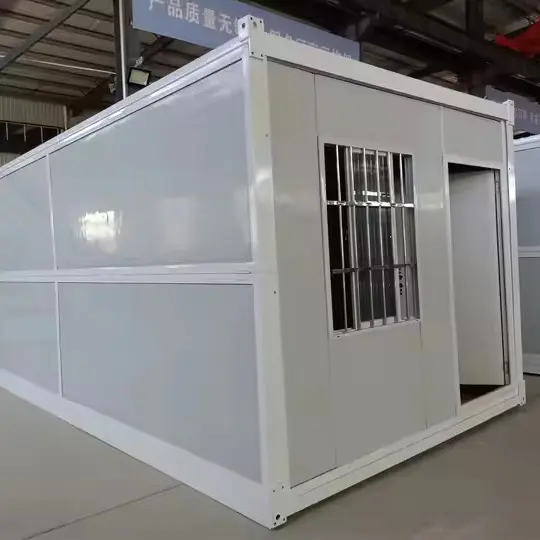
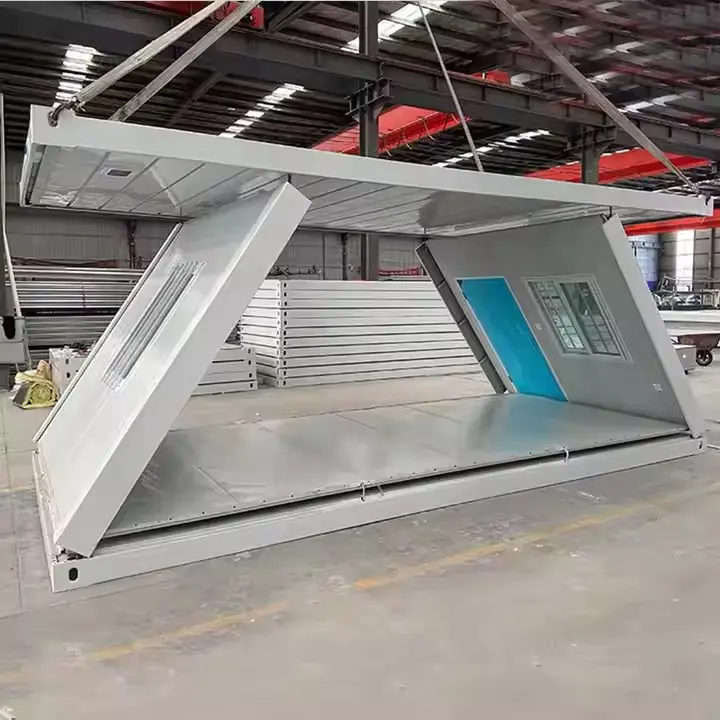
Think of a Folding Container House as a “ready-to-use room” designed to travel efficiently. Instead of shipping a fully assembled module that takes up maximum volume, the unit folds down for transport and then expands on site into a rigid, enclosed space. That single detail—folding—changes the economics: you’re paying for usable space, not shipping air.
Most folding units follow a few common principles:
- Structural frame: steel-based load path engineered to keep the module square after repeated moves.
- Enclosure panels: insulated wall/roof systems (commonly sandwich-style) to support basic comfort.
- Factory-prepared interfaces: doors, windows, wiring routes, and junction points for utilities.
- Fast deployment logic: minimal site work, fewer specialized tools, and shorter installation time.
The result is a unit that can be used as a site office, worker accommodation, clinic room, classroom, security booth, temporary retail space, or a compact living module—often with options for bathroom and kitchen integration depending on your spec.
Pain Points Buyers Face (and How Folding Solves Them)
People don’t buy modular space because it’s trendy. They buy it because they’re tired of getting punished by the same problems over and over. Here are the big ones—and the “fix” you should demand in your purchase spec.
Pain point: Shipping costs explode because volume is wasted.
What to require: clear packing method, container loading plan, and a realistic estimate of units per shipment. Ask for photos/video of packing from past projects, not just a diagram.
What to require: clear packing method, container loading plan, and a realistic estimate of units per shipment. Ask for photos/video of packing from past projects, not just a diagram.
Pain point: On-site labor is limited, expensive, or inconsistent.
What to require: a deployment workflow that avoids “specialist-only” steps, plus a simple installation manual. If the unit needs a crane, confirm the lift points, weight, and safe handling instructions.
What to require: a deployment workflow that avoids “specialist-only” steps, plus a simple installation manual. If the unit needs a crane, confirm the lift points, weight, and safe handling instructions.
Pain point: Units look fine at delivery, then start leaking or warping after weather hits.
What to require: defined waterproofing details, roof drainage logic, sealing materials, and QC checks for doors/windows. Ask about corrosion protection and the intended service environment.
What to require: defined waterproofing details, roof drainage logic, sealing materials, and QC checks for doors/windows. Ask about corrosion protection and the intended service environment.
Pain point: Electrical standards don’t match your region.
What to require: confirmation of voltage, frequency, breaker protection approach, cable routing, and grounding method. Get the exact configuration documented before production.
What to require: confirmation of voltage, frequency, breaker protection approach, cable routing, and grounding method. Get the exact configuration documented before production.
Pain point: Insulation is under-specced for your climate, so the space is miserable (or expensive to heat/cool).
What to require: insulation thickness/type options, airtightness strategy, and recommended HVAC pairing based on your climate. If you’re in a cold or humid region, ask specifically about condensation control.
What to require: insulation thickness/type options, airtightness strategy, and recommended HVAC pairing based on your climate. If you’re in a cold or humid region, ask specifically about condensation control.
A folding unit can absolutely be comfortable and durable—but only if the spec matches the climate, the usage, and the move frequency.
Best-Fit Applications
Folding systems are strongest when your priorities are speed, repeatability, and logistics efficiency. Here’s where they typically deliver the highest ROI:
- Construction and industrial sites: offices, meeting rooms, rest rooms, and staff accommodation.
- Remote projects: mining, energy, telecom, and infrastructure sites where local building resources are scarce.
- Emergency or transitional housing: rapid deployment spaces that can later be relocated or repurposed.
- Pop-up commercial use: temporary retail, ticketing, event support rooms, security stations.
- Public service expansions: temporary classrooms, medical rooms, administrative overflow space.
When are folding units not the best answer? If you need complex multi-story architecture, heavy customization per room, or a permanent structure with extensive foundation and long-term local integration, you may find a different modular system—or conventional construction—fits better.
Comfort, Safety, and Real-World Performance
A Folding Container House should feel like a practical room, not a metal box you regret ordering. Comfort and safety are where “cheap quotes” often hide their compromises, so treat this section as your non-negotiable shopping list.
- Thermal performance: choose insulation appropriate to your climate; demand details for roof, walls, and floor interfaces.
- Air control: ensure doors/windows seal well; add ventilation planning to reduce humidity and odors.
- Acoustic needs: for offices or dorm-style use, ask for sound control options (panel density, window type, interior finishes).
- Weather handling: confirm how rainwater is guided off the roof and away from joints; request sealing and flashing details.
- Fire and safety: align materials, wiring protection, and escape/egress planning with your local expectations.
- Durability for repeat moves: hinges, corner fittings, and frame stiffness matter if you plan to relocate units frequently.
One buyer-friendly tip: always separate the conversation into “the unit” and “the system”. The unit may be excellent, but if your site base isn’t level, drainage is ignored, or utilities are improvised, the experience will still be bad. A good supplier will warn you about site basics instead of letting you fail quietly.
Comparison Table
Here’s a quick, practical comparison to help you pick the right structure type based on the pain you’re trying to avoid.
| Option | Best when you need… | Typical trade-offs | Buyer watch-outs |
|---|---|---|---|
| Folding Container House | Fast deployment + efficient transport + repeat relocation | Less architectural freedom than permanent builds | Confirm folding mechanism durability, sealing details, and utility standards |
| Flat-pack modular | Low shipping volume + flexible layouts on site | More assembly steps; higher reliance on site labor quality | Installation skill requirements and missing parts can delay schedules |
| Fully assembled modular | Minimum on-site work; “plug and use” delivery | Higher shipping volume/cost; handling constraints | Transport limits, route permits, and crane planning become critical |
| Traditional construction | Permanent, customized buildings with local materials | Slow timeline; labor uncertainty; weather delays | Budget creep and schedule slip are common without tight project control |
The “right” choice depends on your constraints: timeline, transport distance, climate, and whether relocation is part of the plan.
Buyer Checklist and Decision Steps
If you want fewer surprises, don’t ask for “a price.” Ask for a solution proposal that matches your scenario. Use the checklist below as a clean RFQ structure.
Step 1: Define the job (not just the product)
- What will the space be used for: office, dorm, clinic, classroom, retail, storage?
- How many people at peak occupancy, and for how many hours per day?
- Is relocation expected (once, yearly, frequently), or is it effectively stationary?
Step 2: Lock the site realities
- Climate: heat, cold, humidity, rain intensity, wind exposure.
- Ground conditions: drainage, leveling tolerance, and base type (pads, beams, simple foundation).
- Access: truck route constraints, lifting equipment availability, site storage space.
Step 3: Specify comfort + utilities
- Electrical: voltage/frequency, outlet standard, lighting requirement, breaker strategy.
- Plumbing: if bathrooms/kitchens are needed, define water supply and waste handling approach.
- HVAC: confirm whether you want pre-cut openings or included systems.
Step 4: Demand transparent quality controls
- Material description for frame, panels, doors/windows, and protective coatings.
- Factory inspection points: sealing checks, dimensional checks, electrical safety checks.
- Packaging method and protection for corners, glass, and hardware during transport.
Step 5: Make the quote comparable
- Ask each supplier to list what is included vs optional (windows, wiring, flooring, bathroom kit, etc.).
- Request an estimated installation workflow and manpower assumptions.
- Confirm lead time, spare parts approach, and basic after-sales support scope.
Working with a Manufacturer
A Folding Container House is a manufactured product, which means consistency is everything. The best outcomes happen when the supplier treats it as an engineered system—frame, folding joints, sealing, and utility routing designed to work together under real site conditions.
Weifang Ante Steel Structure Engineering Co., LTD focuses on folding container house solutions that balance transport efficiency with on-site usability. In practice, that means offering configurable layouts, practical insulation options, and production workflows designed to reduce “field fixes” after delivery.
If you’re comparing suppliers, here are good signs:
- They ask questions about your climate, use case, and utility standards before quoting.
- They can explain sealing, drainage, and corrosion protection in clear, non-sales language.
- They provide a packing/transport plan and a straightforward deployment guide.
- They recommend options based on your scenario instead of pushing maximum add-ons.
And here are red flags that usually cost money later:
- Quotes that avoid specifics on insulation, wiring protection, or material standards.
- “One-size-fits-all” claims that ignore climate or installation constraints.
- Unclear boundaries on what is included, especially for utilities and interior finishing.
FAQ
Q: How fast can a Folding Container House be installed?
A: Speed depends on site readiness and whether utilities are pre-planned. With a level base and a clear workflow, folding units are designed to reduce installation time significantly compared to on-site builds. The biggest delays usually come from poor site leveling, missing lift planning, or last-minute changes to electrical/plumbing.
Q: Will it be comfortable in hot or cold climates?
A: It can be—if insulation, ventilation, and sealing are chosen for your environment. For cold or humid regions, prioritize airtightness and condensation control planning (ventilation + proper panel selection). For hot regions, consider shading strategies and HVAC pairing early rather than as an afterthought.
Q: Can I add a bathroom and kitchen?
A: Many folding setups can be configured with wet areas, but you must define water supply and waste handling clearly. The best results come when the manufacturer prepares routing and interfaces at the factory, and the site provides stable connections with proper drainage logic.
Q: How durable is the folding mechanism if I relocate the unit repeatedly?
A: Durability depends on joint design, frame stiffness, and correct handling during folding/lifting/transport. If repeated moves are part of your plan, ask specifically about reinforcement at stress points, recommended handling steps, and spare hardware availability.
Q: Do I need permits or approvals?
A: Requirements vary by location and use. Temporary site offices may be treated differently from residential use. The safe approach is to check local requirements early and purchase a unit configuration that aligns with your expected standards (especially for fire safety, electrical systems, and occupancy rules).
Q: What’s the most common mistake buyers make?
A: They optimize for the lowest unit price and ignore system costs—shipping, installation workflow, climate fit, and utilities. A slightly higher-spec unit that installs cleanly and performs well usually costs less over the project lifecycle.
Next Step
If you’re trying to solve a tight timeline, unpredictable labor, or expensive logistics, a Folding Container House can be the cleanest path to “usable space” without the usual construction chaos. The smart move is to share your use case, climate, and utility standards up front—then let the configuration match your reality instead of forcing your reality to match a generic unit.
Want a proposal that fits your project instead of a copy-paste quote? Contact us with your target layout, destination, and usage scenario, and we’ll help you identify the most practical folding container solution.