Accelerating the Global Expansion of Modular Construction: Chinese Prefabricated Buildings Capture a Massive Global Market
Against the backdrop of global infrastructure upgrades and the comprehensive implementation of green, low-carbon policies, a new form of construction—one that disrupts traditional civil engineering methods—is gaining immense popularity in international markets. Unlike conventional on-site casting and open-air "wet" construction processes, Chinese modular integrated buildings utilize an industrialized system featuring factory-based prefabrication, standardized containerized transport, and rapid on-site assembly. This approach overcomes the dual constraints of geographical conditions and lengthy construction timelines. Characterized by high efficiency, low-carbon energy savings, and cost-effectiveness, these buildings have become a benchmark for the transformation and upgrading of Chinese manufacturing, with steadily rising market penetration and cross-border order volumes.
The core concept of modular prefabricated construction involves the integrated, customized fabrication of entire functional modules—including the main structural frame, interior and exterior finishes, HVAC and utility systems, and kitchen/bathroom units—within smart domestic factories. These are then disassembled into standardized, independent units and shipped globally via container logistics. Upon arrival at the site, the project requires only simple hoisting, assembly, and system commissioning to reach completion and operational status. This innovative industrialized building model fundamentally overturns the long-standing logic of on-site sequential construction, propelling the industry from extensive, site-based operations into a new era of refined, standardized, and intelligent industrial manufacturing.
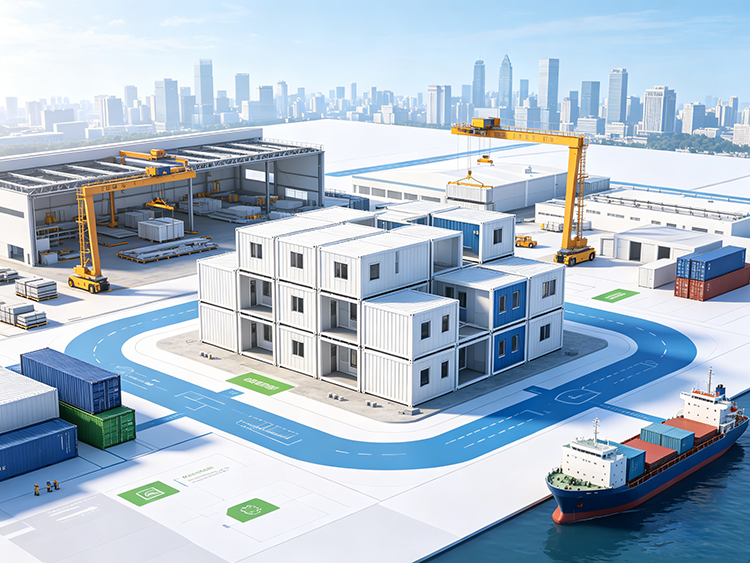
Leveraging a robust domestic supply chain and rigorous end-to-end quality control systems, Chinese modular buildings have earned widespread recognition across global markets. Landmark projects have been successfully completed across Asia, Africa, Europe, the Middle East, and Oceania, with application scenarios continuing to diversify. Leading Chinese prefabricated construction enterprises are accelerating overseas delivery speeds, successfully bringing multiple major international landmark projects to completion and operation. Among these, the office project in Yaoundé, Cameroon—the first permanent modular building in the Central Africa region—utilized 78 high-precision prefabricated modules to create a 3,000-square-meter modern office space, strictly adhering to local standards for permanent construction throughout the process. Meanwhile, a high-end hotel project in Riyadh, Saudi Arabia, is progressing steadily; its low-carbon modular construction approach aligns with local green development plans, effectively lowering overall energy consumption and significantly reducing construction waste.
Expansion into Southeast Asian markets is also accelerating. In April 2026, a Chinese enterprise delivered a benchmark modular staff dormitory project in Indonesia, successfully opening up the market for large-scale commercial application of prefabricated buildings in the region. Additionally, an SMC modular housing project in Australia was successfully delivered across borders; the structural design was customized to withstand Oceania's unique climate, perfectly meeting local needs and earning high praise from overseas clients. Unlike the one-off collaboration model typical of the traditional construction industry, Chinese modular building providers have cultivated a large base of high-quality, repeat customers thanks to stable product quality, rapid delivery, and comprehensive support services. Many overseas partners have upgraded from initial pilot purchases to long-term, in-depth strategic collaborations—continuously placing new orders—which serves as a testament to the superior quality and international reputation of Chinese construction.
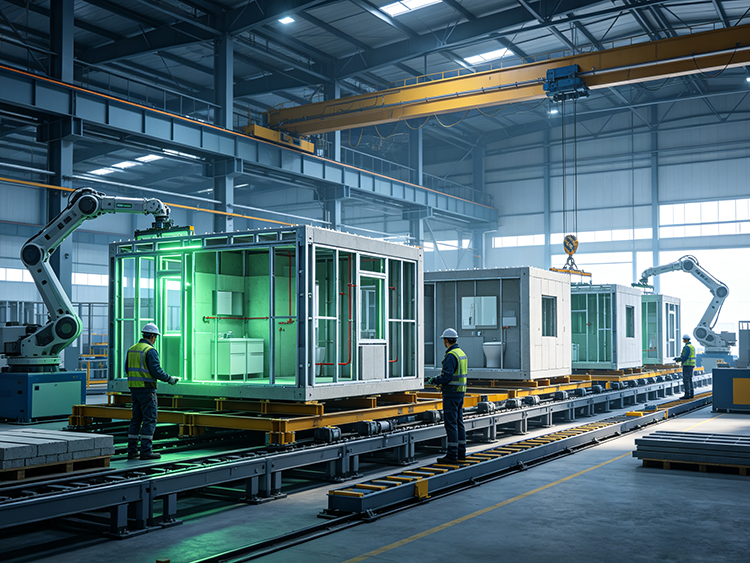
Compared to traditional civil engineering methods, modular prefabricated construction offers distinct competitive advantages in three core areas: construction efficiency, cost control, and environmental sustainability. Traditional construction is highly susceptible to external disruptions such as weather changes, labor shortages, and site constraints, often involving complex workflows and lengthy timelines. In contrast, modular construction employs a parallel workflow—combining factory-based mass prefabrication with simultaneous on-site preparation—which boosts overall efficiency by over 50% and drastically shortens on-site construction time. Furthermore, with more than 90% of the construction process taking place in standardized workshops, issues common to traditional sites—such as material waste, construction errors, and inconsistent workmanship—are effectively avoided; this approach reduces construction waste by approximately 70% and lowers overall carbon emissions by over 30%, aligning perfectly with global trends toward green buildings and low-carbon infrastructure.
In the context of overseas commercial infrastructure, the unique advantages of modular construction are being further realized. In developed regions such as Europe, North America, and the Middle East, labor costs remain high, while traditional infrastructure projects entail substantial investment and long payback periods. In contrast, modular construction significantly streamlines on-site staffing, effectively cutting overseas labor and site management expenses. Crucially, the advantage of rapid deployment enables investors to complete projects and commence operations quickly; this drastically shortens capital turnover cycles and significantly boosts the overall return on investment (ROI), making modular construction the preferred solution for overseas commercial hotels, industrial apartments, and government or corporate office infrastructure.
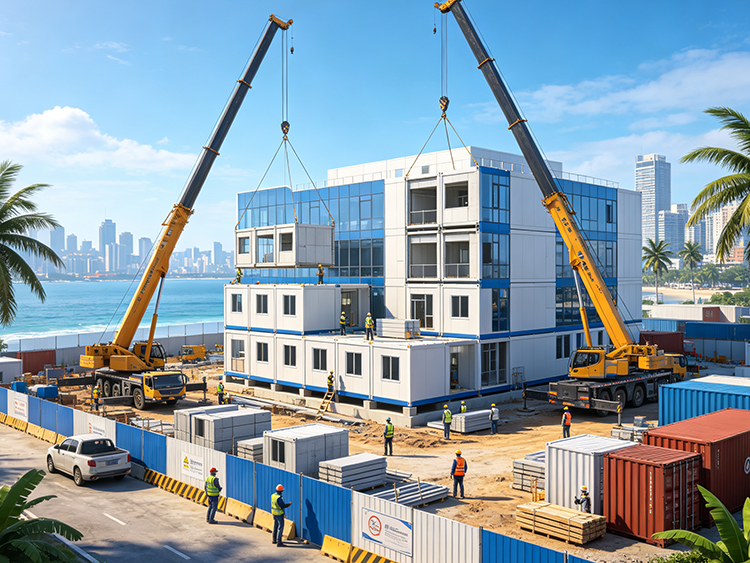
Authoritative industry statistics clearly illustrate the strong momentum of Chinese modular construction in overseas markets. Over the past decade, the export volume of domestically produced prefabricated buildings has steadily climbed. By 2026, the industry's overall export growth rate hit a new milestone, with comprehensive gains across total export value at key ports, product categories, and geographic reach. Beyond traditional sectors like hotels, apartments, offices, and accommodation, modular data centers have emerged as a new growth engine for the industry. Prefabricated data center projects delivered by Chinese enterprises have been successfully deployed in Malaysia, Indonesia, the Middle East, Italy, and other nations, precisely meeting the global market demand for the rapid expansion of digital infrastructure. Industry analysts project that the global modular construction market will surpass the $100 billion mark by 2030, indicating immense potential for future growth.
From a long-term perspective, the overseas expansion of China's modular construction industry has evolved beyond the rudimentary model of simple product exports. It has entered a new, upgraded phase characterized by the export of technologies, business models, and standards. Leading domestic prefabricated construction firms are continuously increasing investment in core technology R&D, adapting to specific market entry and certification regulations in various countries, and refining localized service systems. By honing customized building solutions tailored to diverse regions and scenarios, these companies are steadily enhancing their core product competitiveness and international brand influence.

Driven by continuous technological innovation and deeper penetration into overseas markets, this wave of globalization—fueled by "Smart Manufacturing" from China—will continue to unleash new growth momentum and expand the international footprint of Chinese construction brands.