Why Does a Flat Pack Container House Make So Much Sense for Fast, Flexible Space?
Article Summary
If you’ve ever tried to build (or expand) space on a tight deadline, you already know the pain: labor shortages, weather delays, permits dragging on, budgets creeping upward, and a site that turns into a never-ending construction zone. A Flat Pack Container House tackles those headaches by shifting most of the work into a controlled factory environment and leaving your site with a cleaner, faster assembly job.
In this article, I’ll walk through the real buyer questions that actually matter—comfort in hot/cold climates, durability, transport planning, on-site assembly reality, what “customization” should include (and what it shouldn’t), and how to compare suppliers fairly. I’ll also share a decision table and a no-nonsense checklist you can use before you pay any deposit.
Contents
- Outline
- What problems does a Flat Pack Container House solve
- How the flat-pack approach changes the timeline
- How to know if it fits your site and local rules
- Comfort and durability choices you shouldn’t guess on
- Layouts, scaling, and “future-proofing” the footprint
- Transport and assembly planning without nasty surprises
- How I’d evaluate a supplier before signing
- Cost planning and the hidden line items buyers miss
- A practical pre-order checklist
- FAQ
- Closing thoughts
Outline
- Buyer pain points: time, labor, unpredictability, and relocation
- What “flat pack” really means for schedule and site disruption
- Site-fit checks: climate, utilities, foundations, and local approvals
- Performance choices: insulation, doors/windows, roof strategies
- Scaling: combining units for living, offices, dorms, sanitation blocks
- Logistics: shipping, unloading, assembly tools, and crew planning
- Supplier due diligence: drawings, materials, QC, documentation
- Cost reality: total installed cost and what people forget to include
- Checklist + FAQ + next steps
What problems does a Flat Pack Container House solve
Most buyers don’t wake up thinking, “I want a modular building.” They wake up thinking, “I need space and I need it yesterday.” A Flat Pack Container House is popular because it responds directly to the most common pain points:
- Deadlines that won’t move: construction projects, remote operations, emergency responses, seasonal business peaks.
- Labor uncertainty: you can’t always find enough skilled people at the right time, especially outside cities.
- Site disruption: you need a cleaner build that doesn’t block operations for months.
- Budget creep: traditional builds invite change orders, delays, and long rentals for temporary facilities.
- Relocation risk: today’s “temporary” often becomes “we need to move it next year.”
The key idea is simple: do repetitive work in a factory, then assemble quickly on site. That’s the core promise of the Flat Pack Container House model—reduce uncertainty, reduce timeline exposure, and keep the site phase short.
How the flat-pack approach changes the timeline
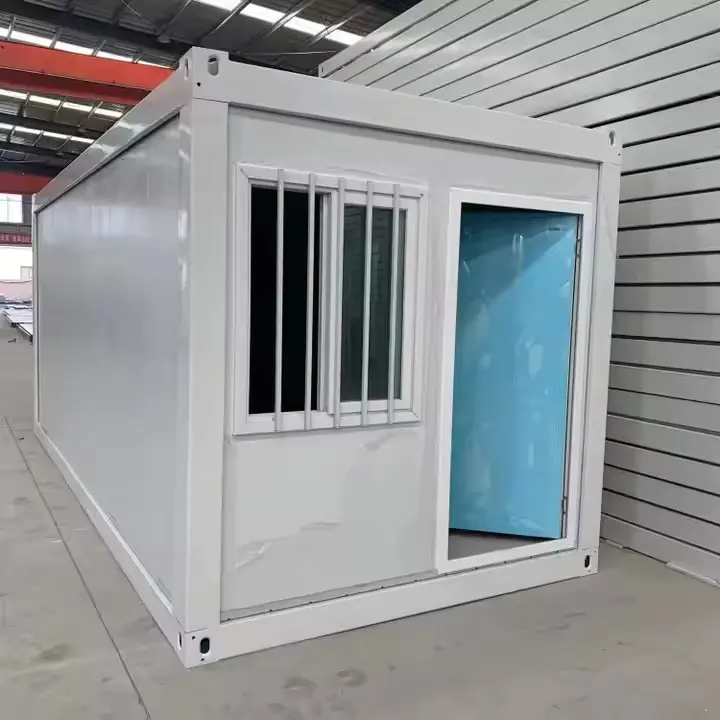
“Flat pack” is not just a buzzword. It means the building’s primary components are manufactured and prepared in advance, then shipped in a compact form, and assembled on site with predictable steps. In practice, this shifts the risky parts of the timeline (weather, site delays, labor variability) into a more controllable workflow.
Here’s the real-world impact: instead of a long on-site build, you typically get a short, repeatable assembly sequence—positioning the frame, connecting panels, fitting doors/windows, finishing utilities, and checking weatherproofing. For buyers, this matters because a shorter on-site phase usually means: fewer days of disruption, fewer “we’ll come back next week,” and fewer costs that multiply with time.
| Buyer Concern | Traditional Build | Flat Pack Container House Approach |
|---|---|---|
| Schedule predictability | High exposure to weather, subcontractor delays, and sequencing issues | More work completed before shipping; site steps become repeatable and faster |
| Site cleanliness | Extended noise, dust, materials storage, and traffic | Shorter on-site window with fewer loose materials and fewer trades |
| Relocation | Hard (or impossible) without major demolition | Designed to be moved and reused when planned correctly |
| Scaling | Expansion often feels like a “new project” | Add units as demand changes; plan doors and corridors for future connections |
How to know if it fits your site and local rules
I’m going to be blunt: the best Flat Pack Container House in the world can still become a headache if the site basics aren’t handled early. Before you get attached to layouts and finishes, do these checks:
- Local approvals: ask what the structure is classified as (temporary building, modular building, site office, accommodation, etc.).
- Foundation approach: confirm whether you’re using strip footings, piers, a slab, or a compacted pad—then match anchoring plans.
- Wind, snow, and seismic: local conditions matter; request structural calculations or engineering support where required.
- Utilities and drainage: decide early where power, water, sewage, and condensate will run, and how you’ll protect connections.
- Fire and egress: don’t improvise later—exit paths, door swings, and occupancy loads should be planned from day one.
A responsible supplier will help translate these site constraints into a buildable plan. When I review supplier options, I look for clear drawings, transparent options for wall/roof systems, and a willingness to document materials rather than hand-wave.
Comfort and durability choices you shouldn’t guess on
Buyers often underestimate comfort until the first hot season or the first cold snap. Comfort is a system: insulation, airtightness, roof strategy, window/door quality, and ventilation. A Flat Pack Container House can be genuinely comfortable—but only if you choose the right configuration.
Insulation and panels: Many projects use insulated sandwich panels (for example, rock wool for fire performance, or polyurethane/PIR options for higher thermal efficiency). Thickness and material choice should match climate and intended use. If you’re placing units in hotter regions, roof strategies matter even more.
Roof design: In warm climates, a double-layer roof concept (or added shading/air gap strategy) can reduce heat gain dramatically. In rainy regions, details like flashing, guttering, and sealed penetrations prevent long-term problems.
Doors and windows: Security is one side; energy loss is the other. Ask about frame materials, glazing options, seals, and whether shutters or protective grills are available for specific use cases (remote sites, public-facing kiosks, or guard rooms).
Steel frame and corrosion protection: If your site is coastal, humid, or industrial, talk about coatings and maintenance expectations upfront. “Durable” should be defined in writing, not promised in marketing language.
Layouts, scaling, and “future-proofing” the footprint
One reason the Flat Pack Container House format keeps winning tenders is how easily it adapts to different scenarios. Instead of forcing one building to do everything forever, you can treat space like a modular system—add what you need, when you need it.
- Residential blocks: combine standard units to create multi-bedroom layouts, living areas, and integrated bathrooms.
- Office space: plan private offices, open work areas, and meeting rooms by linking modules and aligning corridors.
- Dormitories: scale sleeping capacity efficiently while keeping circulation and ventilation sensible.
- Sanitation units: build dedicated toilet/shower blocks that can be placed where infrastructure is easiest.
- Guard rooms and kiosks: compact units with power options (including solar setups in the right projects) for flexible placement.
The “future-proofing” trick is to plan connection points early: where would a corridor attach later, which wall panels might become door openings, and where should utilities be routed so expansion doesn’t require tearing everything apart.
Transport and assembly planning without nasty surprises
Transport is where many projects lose money silently. A Flat Pack Container House can reduce shipping volume, but you still need a clear plan: packaging, loading, unloading, and site access.
Questions I always ask:
- How many units can be shipped per container/truck for this exact configuration (including accessories and furniture)?
- What equipment is required on arrival—forklift, crane, or manual handling with a small crew?
- What’s included in the assembly kit (fasteners, sealants, drawings), and what must the buyer source locally?
- How is weatherproofing handled at joints, roof penetrations, and door/window openings?
- What does the supplier recommend for a typical assembly crew size and skill level?
If the supplier can provide clear assembly steps, labeled components, and predictable quality, the installation becomes a project you can schedule confidently. If everything sounds vague, assume you’ll pay for that vagueness on site.
How I’d evaluate a supplier before signing
Choosing a Flat Pack Container House is also choosing a long-term partner—because spare parts, expansions, technical drawings, and service responsiveness matter after delivery.
When reviewing suppliers such as Weifang Ante Steel Structure Engineering Co., Ltd., I look for practical proof in three areas:
- Engineering clarity: layout drawings, connection details, and a documented list of materials and options.
- Quality control habits: repeatable fabrication processes, consistent panel/steel specifications, and inspection checkpoints.
- Project thinking: the ability to suggest cost control and spatial planning based on your use case (not just selling a “standard box”).
A good sign is when the supplier asks you smart questions about climate, occupancy, and utilities before quoting. A bad sign is when they quote instantly without understanding how you’ll actually use the building.
Cost planning and the hidden line items buyers miss
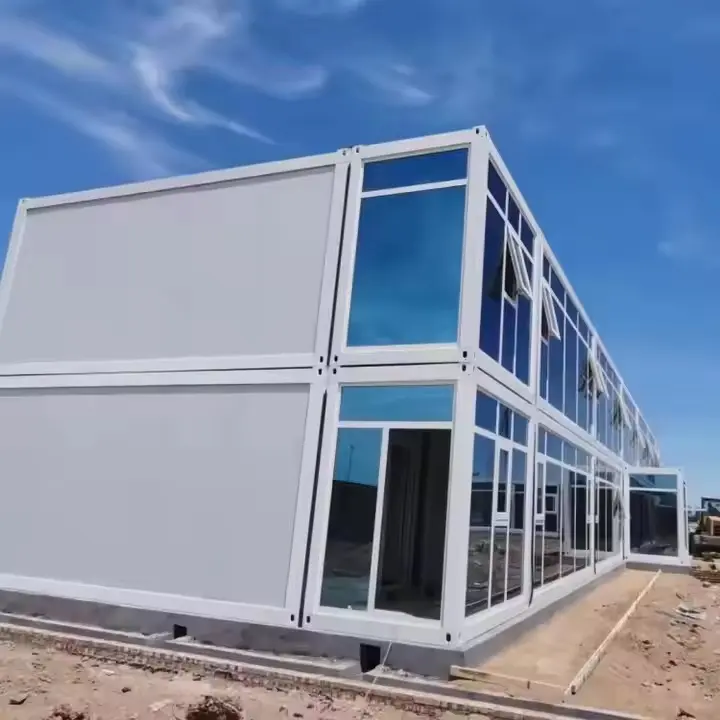
People compare prices incorrectly all the time. They compare a unit price against a “finished building” in their head. To compare fairly, treat your Flat Pack Container House as a total installed system.
| Cost Category | What It Typically Includes | Common Buyer Mistake |
|---|---|---|
| Base unit | Frame, wall/roof panels, doors/windows per spec | Assuming insulation level and finishes are “standard” |
| Interior & utilities | Electrical, lighting, plumbing points, HVAC readiness | Forgetting local code requirements and device ratings |
| Foundation & site works | Pad/slab/piers, drainage, access road improvements | Underestimating soil prep and water management |
| Transport & unloading | Shipping, port fees, inland trucking, handling equipment | Not planning site access for large vehicles |
| Assembly & sealing | Labor, tools, sealants, testing, punch list fixes | Assuming “DIY” means “no skilled labor needed” |
The best way to protect your budget is to request an itemized scope from the start: what is included, what is optional, and what must be sourced locally. That’s how you stop surprise costs from sneaking in later.
A practical pre-order checklist
Use this before you commit to any Flat Pack Container House purchase. If a supplier can’t answer these clearly, it’s not “a small detail”—it’s a risk.
- Confirmed intended use (office, dorm, housing, sanitation, guard room) and expected occupancy
- Climate requirements mapped to insulation and roof strategy
- Site plan: foundation type, anchoring, drainage, and access route for delivery
- Door/window specs confirmed for security + energy performance
- Utilities scope documented: voltage, outlets, lighting, plumbing points, HVAC assumptions
- Assembly plan: crew size, tools list, estimated assembly sequence, sealed-joint method
- Documentation request: drawings, bill of materials, installation guidance, maintenance notes
- After-delivery support defined: spare parts, add-on modules, response timeline
If you want a smoother rollout, ask the supplier to review your checklist and mark what they provide versus what you must provide. That one step prevents most misunderstandings.
FAQ
Is a Flat Pack Container House only for temporary projects?
Not necessarily. Many buyers start with a “temporary” use case and then keep the buildings in service for years. The deciding factors are configuration, maintenance planning, and local approvals for longer-term occupancy.
How fast can a Flat Pack Container House be installed?
It depends on unit size, site readiness, crew experience, and how much interior work is included. The most important speed lever is preparation: foundation, utilities, and delivery access should be ready before the shipment arrives.
What insulation should I choose?
Match it to climate, fire expectations, and energy costs. Rock wool is often chosen for fire performance, while polyurethane/PIR options are often chosen for higher thermal efficiency. Ask for a clear insulation specification and panel thickness rather than accepting vague descriptions.
Can I combine units into larger buildings later?
Yes—this is one of the biggest advantages. Plan connection points early: door openings, corridor alignment, and utility routing. A little planning upfront makes future expansion far cleaner.
Do I need heavy equipment on site?
Sometimes yes, sometimes no. It depends on the delivery format and site conditions. Ask the supplier what unloading and positioning method they assume, and confirm your site can support it.
How do I compare suppliers without getting fooled by a low price?
Compare scope, not slogans. Request drawings, a bill of materials, insulation/roof/door/window specs, and a list of included accessories. If the quote is cheap because it omits key items, it will get expensive later.
What should I ask about waterproofing?
Ask how seams are sealed, how roof penetrations are finished, and what testing/inspection is done before shipment or after assembly. Waterproofing is mainly about details, not marketing promises.
Is it possible to add furniture and electrical devices as a package?
Many suppliers can provide optional supporting items (office furniture, electrical devices, etc.) as part of a one-stop package. If you choose this route, confirm power ratings, plug standards, and compatibility with your local requirements.
Closing thoughts
A Flat Pack Container House is at its best when you treat it like a system, not a “box.” If you align the configuration with your climate and use case, plan site readiness early, and choose a supplier who documents details clearly, you’ll get a building that arrives faster, disrupts less, and adapts as your needs change.
If you’re planning a project and want a clear, itemized proposal (including layout suggestions and configuration options), reach out to Weifang Ante Steel Structure Engineering Co., Ltd.—tell them your site conditions, climate, and intended use, and contact us to start shaping a solution that won’t surprise you halfway through installation.